

Cart
0
Whey Protein Causing Bloating or Gas? Here’s How to Choose an Easy-to-Digest Protein
You finish your workout, mix a protein shake and expect better recovery. Instead, your stomach feels heavy, tight or uncomfortably full. Perhaps you notice gas, rumbling or an urgent trip to the washroom.
If this sounds familiar, you are not alone—and it does not automatically mean that whey protein is unsuitable for you.
Digestive discomfort after a whey protein shake can have several causes. Lactose sensitivity is one possibility, but serving size, sweeteners, additives, drinking speed and the type of whey may also matter. Understanding the difference can help you choose a protein powder that supports your nutrition without making every shake feel like a compromise.
Why Can Whey Protein Cause Bloating or Gas?
Whey is a milk-derived protein. Depending on how it is processed, a whey protein powder may retain varying amounts of lactose, the natural sugar found in milk.
People who do not digest lactose efficiently may experience bloating, gas, abdominal discomfort, rumbling, nausea or loose stools after consuming lactose-containing foods. The intensity can vary according to the amount consumed and the individual’s tolerance. These are recognised symptoms of lactose intolerance, although similar symptoms can have other causes.
Importantly, feeling bloated after one shake is not enough to diagnose lactose intolerance. Look at the complete pattern: the product used, quantity consumed, other ingredients in the shake and whether similar symptoms occur after milk or other dairy products.
Seven Common Reasons Your Protein Shake May Feel Heavy
1. The product contains more lactose than you tolerate
Whey protein concentrate generally retains more lactose than whey protein isolate, although the actual amount varies by product and manufacturing process. Someone with mild lactose sensitivity may tolerate a smaller serving but experience symptoms after a larger one.
If dairy routinely causes discomfort, compare product labels and speak with a qualified healthcare professional before experimenting repeatedly.
2. You consume too much in one sitting
More protein is not automatically better. A large scoop, an extra scoop “for faster results,” or a shake combined with a heavy meal can make digestion feel uncomfortable.
Follow the labelled serving size. If you are new to whey protein, beginning with a smaller portion can help you assess personal tolerance before increasing your intake.
3. You drink the shake too quickly
Drinking rapidly can cause you to swallow more air. That may contribute to belching, pressure and bloating. Sip the shake steadily rather than finishing it in seconds.
4. The formula contains unnecessary additives
Protein powders may contain flavours, colours, gums, bulking agents and different sweetener systems. Individual responses vary, but a long ingredient list makes it harder to identify what may be causing discomfort.
For a sensitive stomach, begin by looking for a clean, transparent formula with clearly declared ingredients and without unnecessary fillers.
5. Your shake contains several other ingredients
The whey may not be the only issue. Milk, nut butter, oats, fruit, fibre powders and multiple supplements can turn a simple protein shake into a very large meal.
To identify the trigger, first try the labelled serving mixed only as directed. Add other ingredients one at a time after you know how the basic shake feels.
6. You take it on an empty stomach
Some people tolerate whey perfectly after food but feel uncomfortable when they drink it on an empty stomach. Personal tolerance matters more than following a universal rule about the “perfect” time.
7. The problem may not be whey protein
Persistent bloating can be associated with lactose intolerance and many other digestive conditions. If symptoms are frequent, severe or accompanied by abdominal pain, vomiting, diarrhoea, blood in the stool, unexplained weight loss or breathing difficulty, stop using the product and seek medical advice.
Whey Protein Isolate vs Concentrate: Which Is Easier to Digest?
The words isolate and concentrate describe how whey has been processed—not whether a product is automatically good or bad.
Whey protein concentrate
Whey concentrate contains protein along with varying quantities of lactose, fat and other milk components. It can offer good nutrition and taste, but people with lactose sensitivity may find some concentrates less comfortable.
Whey protein isolate
Whey isolate undergoes additional processing to increase the proportion of protein while reducing much of the lactose and fat. For this reason, some lactose-sensitive consumers prefer an isolate-led formula. However, whey isolate is still derived from milk and is not appropriate for anyone with a milk-protein allergy.
Whey protein hydrolysate
Hydrolysed whey is partially broken into smaller peptides. It is often marketed for rapid digestion, but it can cost more and may have a more bitter taste. It is not automatically necessary for every consumer.
The best choice is the one that fits your dietary needs, tolerance, budget and total daily protein requirement.
How to Choose an Easy-to-Digest Whey Protein
Check the protein delivered per serving
Do not judge a product only by the size of the scoop or pouch. Compare how many grams of protein you receive per labelled serving.
Read the complete ingredient list
Look beyond the front-panel claims. Check the protein source, flavours, colours, sweeteners, fillers and other ingredients. A transparent label helps you make a more informed choice.
Consider lactose sensitivity
If ordinary milk causes bloating or gas, a lower-lactose option may be worth discussing with a dietitian or doctor. People with a diagnosed milk allergy should avoid whey unless their healthcare professional advises otherwise.
Avoid unnecessary complexity
A product does not need an extremely long ingredient list to look impressive. Choose a formula built around useful nutrition rather than decorative additions.
Look for good mixability
A powder that disperses smoothly is easier to use consistently. Mix it with the recommended amount of water and avoid making an unnecessarily thick shake.
Start with the labelled serving
Do not double the serving because you missed a meal or had a harder workout. Your total protein requirement depends on your diet, body weight, age, activity and health—not marketing enthusiasm.
Choose a credible manufacturer
Check the mandatory label information, batch details, expiry, ingredient declaration, serving size and manufacturer information. Avoid anonymous or incompletely labelled protein powders.
How to Take Whey Protein Without Feeling Uncomfortably Full
Try this simple routine:
-
Use the serving stated on the product label.
-
Mix it with the recommended amount of cool water.
-
Shake until smooth rather than making an extremely thick drink.
-
Sip steadily instead of drinking it all at once.
-
Avoid combining several new ingredients in the same shake.
-
Track how you feel for the next few hours.
-
If necessary, try a smaller serving and discuss recurring symptoms with a healthcare professional.
Consistency matters more than forcing down a shake that repeatedly makes you uncomfortable.
A Cleaner Way to Support Everyday Protein Intake
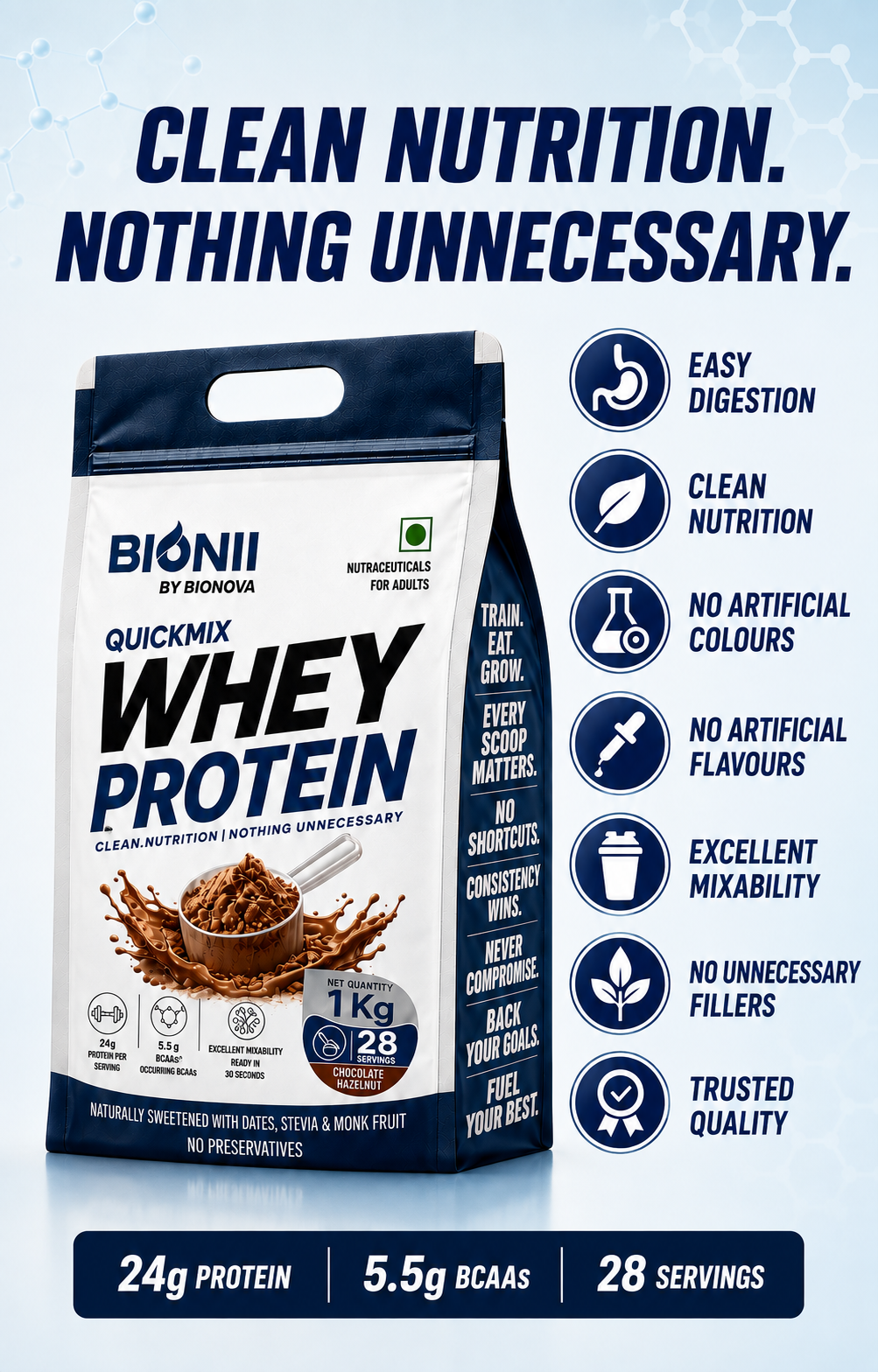
Bionii Quickmix Whey Protein is designed for consumers who want straightforward sports nutrition with a clean-label approach.
Based on the product label, each serving provides:
-
24 g protein
-
5.5 g naturally occurring BCAAs
-
Excellent mixability
-
28 servings per 1 kg pouch
-
No artificial colours
-
No artificial flavours
-
No unnecessary fillers
-
No preservatives
-
Naturally sweetened with dates, stevia and monk fruit
Available in Chocolate Hazelnut and Creamy Vanilla, Bionii Quickmix is made for everyday protein convenience without unnecessary complexity.
Explore Bionii Quickmix Whey Protein on Bionii.com.
Frequently Asked Questions
Does whey protein cause bloating?
It can cause bloating in some people, particularly when lactose is not well tolerated, the serving is too large or the shake contains other ingredients that are difficult for that individual to digest. Whey does not cause bloating in everyone.
Why does whey protein make me gassy?
Possible reasons include lactose sensitivity, drinking the shake too quickly, a large serving, added ingredients or combining the powder with milk and several other foods. Test one variable at a time rather than assuming protein itself is the cause.
Which whey protein is best for a sensitive stomach?
Look for a clearly labelled product with a clean ingredient list, an appropriate serving size and minimal unnecessary additives. Some lactose-sensitive consumers may prefer whey isolate because it generally contains less lactose than concentrate, but individual tolerance differs.
Is whey protein isolate lactose-free?
Not necessarily. Whey isolate usually contains substantially less lactose than concentrate, but “isolate” should not automatically be interpreted as completely lactose-free. Check the product label and manufacturer information.
Can I take whey protein with water instead of milk?
Yes. Mixing whey with water reduces the additional lactose and calories that milk would add. It also makes it easier to assess how you tolerate the protein powder itself.
Can whey protein cause acidity?
Some people report upper-abdominal discomfort or reflux-like symptoms after a large or rapidly consumed shake, but acidity has several possible causes. Try a smaller serving, avoid lying down immediately afterward and seek medical advice if symptoms persist.
Should I stop whey protein if I feel bloated?
Pause and review the serving size, mixing liquid and other ingredients. If symptoms recur, are severe or include warning signs, stop using the product and consult a doctor or registered dietitian.
Is whey protein suitable for people with milk allergy?
No general assumption should be made. Whey is a milk protein. A milk-protein allergy is different from lactose intolerance and can cause serious reactions. Anyone with a diagnosed or suspected milk allergy should seek medical guidance and avoid self-testing whey products.
Final Takeaway
The best whey protein is not simply the one with the loudest muscle-building claim. It is the one that fits your nutritional requirements, has a transparent formula, mixes easily and agrees with your body.
If whey protein is causing bloating or gas, investigate the likely reason instead of abandoning your protein goals—or ignoring repeated discomfort. Check the type of whey, lactose content, serving size, additives and the way you prepare your shake. A cleaner and more deliberate choice can make daily protein intake much easier to maintain.
Disclaimer: This article is for general educational purposes and is not a substitute for medical advice, diagnosis or treatment. Protein requirements and digestive tolerance vary. Consult a doctor or registered dietitian if you have persistent digestive symptoms, kidney disease, liver disease, milk allergy, pregnancy-related dietary questions or another medical condition.


