

Cart
0
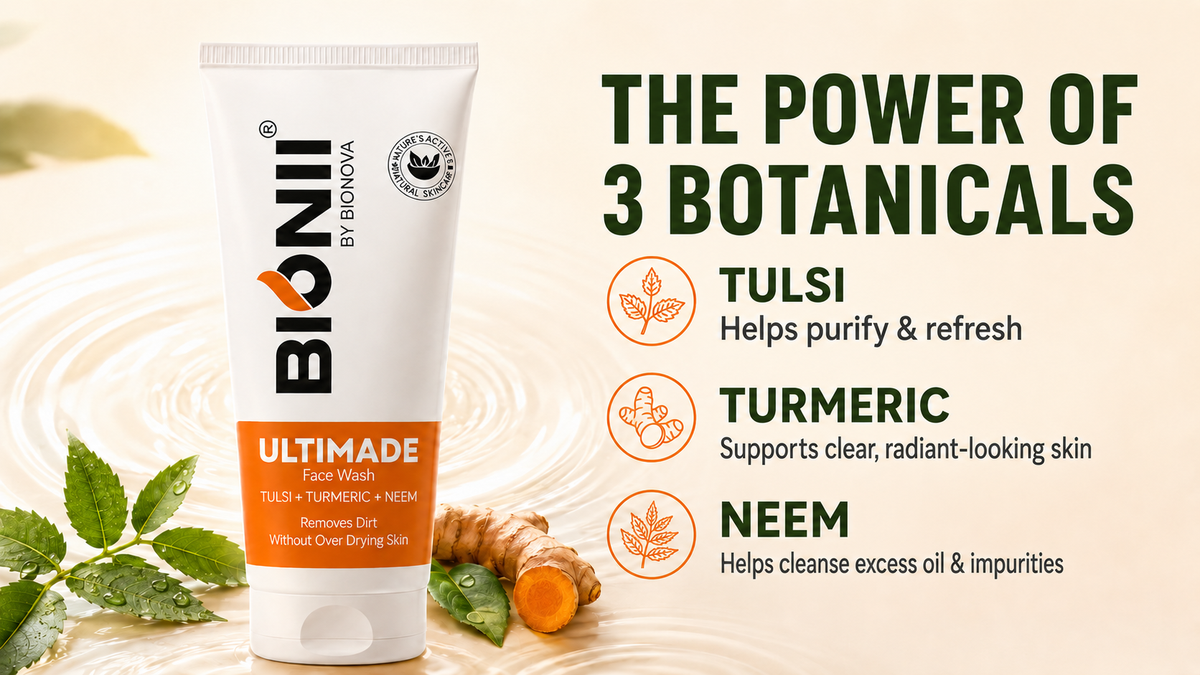
Breakouts rarely have a single cause. Excess sebum production, clogged pores, bacterial overgrowth (Cutibacterium acnes), and deep-seated inflammation often strike simultaneously. While harsh synthetic cleansers can strip the surface layer—often triggering a rebound overproduction of oil—Ayurvedic botanical science offers a balanced alternative.
The combination of Neem, Tulsi (Holy Basil), and Turmeric (Haldi) forms one of the most potent plant-based trios for managing acne-prone skin. Here is an in-depth breakdown of how this herbal trifecta works, why it outperforms single-ingredient formulas, and how to incorporate it into your daily skincare ritual for lasting clarity.
The Power Trio: How Neem, Tulsi, and Turmeric Target Acne
Each herb in this formulation addresses a specific phase of the acne lifecycle:
1. Neem (Azadirachta indica): The Antibacterial Workhorse
Neem has been central to Ayurvedic dermatology for centuries due to its high concentration of nimbin, nimbidin, and essential fatty acids.
-
Neutralizes Bacteria: Neem targets active acne-causing bacteria on the skin’s surface, preventing small microcomedones from turning into inflamed pustules.
-
Regulates Sebum: It cleanses deep within the pore lining without depleting the natural moisture barrier, curbing the mid-day oil slick common to oily and combination skin types.
2. Tulsi (Ocimum sanctum): The Purifying Pore Detoxifier
Known as Holy Basil, Tulsi is an adaptogenic herb rich in eugenol, camphene, and ursolic acid.
-
Deep Cleanses Pores: Tulsi works as a natural astringent, helping dissolve cellular debris, environmental pollutants, and trapped sebum inside congested pores.
-
Calms Irritation: It soothes redness, cooling irritated flare-ups and reducing the likelihood of cystic swelling.
3. Turmeric (Curcuma longa): The Anti-Inflammatory Brightener
The active compound in turmeric, curcumin, is a recognized antioxidant and anti-inflammatory powerhouse.
-
Soothes Active Inflammation: Turmeric reduces the swelling, heat, and redness of fresh blemishes.
-
Fades Post-Acne Marks (PIH): It inhibits excess melanin production triggered by acne damage, accelerating the fading of dark spots and hyperpigmentation left behind by healed pimples.
Why Single-Herb Washes Fall Short
Most anti-acne cleansers rely solely on a single active ingredient, such as salicylic acid or isolated tea tree oil. While effective, single actives often cause collateral damage: peeling, barrier compromise, or localized dryness.
| Skincare Need | Neem Only | Tulsi Only | Turmeric Only | Combined Trio |
| Bacterial Defense | Excellent | Moderate | Mild | Maximum |
| Pore Clarification | Moderate | Excellent | Mild | Maximum |
| Redness & Swelling Relief | Mild | Moderate | Excellent | Maximum |
| Dark Spot & Scar Fading | Low | Low | Excellent | Maximum |
| Barrier Hydration Balance | Moderate | Moderate | Moderate | Optimal |
By using Neem, Tulsi, and Turmeric together, you eliminate the need to layer multiple drying treatments. The trio works synergistically: Neem neutralizes the infection, Tulsi flushes the pore, and Turmeric heals the skin tissue.
Key Benefits of Using a Neem, Tulsi & Turmeric Face Wash
-
Stops Breakouts at the Root: Cleanses away daily dirt, sunscreen, and bacteria before they congest sebum channels.
-
Non-Stripping, Soap-Free Cleansing: Formulated to maintain the skin’s natural acidic mantle (approx. pH 5.5), preventing secondary barrier breakdown.
-
Minimizes Pores and Mattifies: Tightens the appearance of dilated pores and keeps surface shine under control for hours.
-
Even Skin Tone: Continuous use prevents long-term dark marks and smooths uneven texture caused by chronic breakouts.
How to Use It in Your Skincare Routine for Maximum Results
Applying a therapeutic cleanser correctly ensures the botanical actives have sufficient contact time with your skin:
-
Prep with Lukewarm Water: Splash your face with lukewarm water to loosen surface dirt. Avoid hot water, which strips natural lipids and causes broken capillaries.
-
Activate the Gel: Dispense a coin-sized amount of the face wash onto clean hands. Rub your palms together to work up a light, gentle lather.
-
The 60-Second Rule: Massage the lather across your face in gentle, upward circular motions for 60 seconds. Spend extra time along the T-zone (forehead, nose, chin) and jawline where oil and bacteria collect.
-
Rinse and Pat Dry: Rinse thoroughly with cool water to refresh the skin. Gently pat dry with a fresh, clean microfiber cloth—never rub or pull.
-
Follow with Hydration: Immediately seal in hydration with an oil-free, non-comedogenic moisturizer and follow with a broad-spectrum SPF 50 during the day.
Frequently Asked Questions
Can Neem face wash permanently cure acne?
Neem face wash does not cure internal causes of acne like hormonal imbalances, but it effectively prevents and treats topical breakouts by eliminating acne-causing bacteria (C. acnes), clearing clogged sebum, and stopping new microcomedones from forming.
Is a Neem, Tulsi, and Turmeric face wash good for dry skin?
Yes, provided the cleanser is sulfate-free (SLS/SLES-free) and formulated with hydrating bases like aloe vera or vegetable glycerin. While Neem and Tulsi control excess oil, Turmeric soothes without stripping natural moisture.
Does Turmeric in face wash stain the skin yellow?
No. High-grade facial cleansers use pure extracts or cosmetic-grade curcumin formulated to rinse away cleanly with water, delivering antioxidant and anti-inflammatory benefits without leaving any yellow tint or residue.
How often should you use Neem, Tulsi, and Turmeric face wash?
Use it twice daily—once in the morning to remove overnight oil and dead skin, and once at night to cleanse away accumulated grime, sweat, and environmental pollutants.
Does Neem face wash help fade dark spots and acne scars?
Yes. While Neem controls the initial breakout, Turmeric actively inhibits excess melanin production (post-inflammatory hyperpigmentation) to fade dark marks and even out post-acne skin tone over 3 to 4 weeks.
Can I use this face wash if I have active, painful cystic pimples?
Yes. The anti-inflammatory properties of Tulsi and Curcumin (Turmeric) calm painful cystic swelling and redness, while Neem's antimicrobial action stops infection from spreading to adjacent pores.
Can I use vitamin C or Niacinamide after washing my face with this cleanser?
Yes. Botanical cleansers containing Neem, Tulsi, and Turmeric leave the skin at a balanced pH, making them fully compatible with active serums like Niacinamide, Vitamin C, Hyaluronic Acid, and Salicylic Acid.
How long does it take for Neem and Tulsi face wash to show results on acne?
Surface oil reduction and relief from active redness typically occur within 3 to 5 days. Significant reduction in inflammatory breakouts and clearer pores are visible after 2 to 4 weeks of consistent twice-daily use.
Does Neem face wash cause skin purging?
No. Pure botanical ingredients like Neem, Tulsi, and Turmeric soothe inflammation and cleanse pores without accelerating skin cell turnover rates, meaning they do not trigger a traditional retinol- or acid-style purge.
Is this herbal face wash suitable for sensitive, allergy-prone skin?
Generally yes, because it avoids harsh synthetic detergents. However, because natural botanicals are biologically active, always perform a 24-hour patch test behind the ear or on the jawline before full facial application.
Medically & Botanically Reviewed by the Bionii Formulation Team.


