

Cart
0
Best Whey Protein for Sensitive Stomach in India: What to Look for Before You Buy
Choosing a whey protein should make your nutrition easier, not leave you dealing with bloating, gas, heaviness or an upset stomach after every shake.
Yet “easy to digest” is used so widely that it can be difficult to know what it actually means. One product may highlight whey isolate. Another may promote digestive enzymes. A third may simply use fewer ingredients. None of these factors alone guarantees that a protein powder will suit every person.
The best whey protein for a sensitive stomach in India is the one that combines an appropriate protein source, a transparent ingredient list, sensible serving size, good mixability and a formula that agrees with your individual tolerance.
This guide explains exactly what to check before buying.
Why Does Whey Protein Feel Heavy for Some People?
Whey is a complete protein derived from milk. It supplies essential amino acids, but different whey products may contain different amounts of lactose, fat, flavouring agents, gums, sweeteners and other ingredients.
For some consumers, the protein itself is not the main problem. Discomfort may instead be associated with:
-
Lactose sensitivity
-
A serving that is too large
-
Drinking the shake too quickly
-
Mixing whey with milk instead of water
-
Multiple added sweeteners, gums or fillers
-
Combining the shake with several heavy ingredients
-
An unrelated digestive condition
Lactose intolerance can cause symptoms such as bloating, gas, abdominal discomfort, rumbling, nausea or diarrhoea after consuming lactose-containing foods. However, digestive symptoms alone cannot confirm the cause. Persistent or severe symptoms require medical assessment.
What Makes a Whey Protein Easier to Digest?
There is no universal “sensitive stomach” formula, but the following characteristics can help you compare products more intelligently.
1. A clearly identified whey protein source
Check whether the label identifies the product as whey protein concentrate, whey protein isolate, hydrolysed whey or a blend.
Whey protein concentrate
Whey concentrate contains protein along with varying amounts of lactose, fat and other milk components. Many people digest it comfortably, but someone with lactose sensitivity may react to certain concentrate-heavy formulations.
Whey protein isolate
Whey isolate undergoes additional filtration to increase its protein concentration and remove much of the lactose and fat. It may therefore be a better starting point for some lactose-sensitive consumers, although “isolate” does not automatically mean completely lactose-free.
Hydrolysed whey protein
Hydrolysed whey is partially broken down into smaller peptides. It is often promoted for rapid digestion, but it may be more expensive and can have a bitter taste. Most consumers do not need to choose hydrolysed whey automatically.
2. A straightforward ingredient list
More ingredients do not necessarily mean a better protein powder.
If your stomach is sensitive, an extremely long ingredient list can make it difficult to identify what is causing discomfort. Look for a transparent formula without unnecessary fillers or decorative ingredients that do not contribute meaningfully to the product.
Always read the complete ingredient panel rather than relying only on front-of-pack phrases such as “premium,” “advanced” or “clean.”
3. The right serving size for you
A product may be well formulated and still feel uncomfortable if you take more than the labelled serving or combine it with a heavy meal.
Start with the recommended quantity. If you are using whey protein for the first time, consider beginning with a smaller amount to assess tolerance. Increasing the serving should be based on your overall protein requirement—not the belief that two scoops will produce results twice as quickly.
4. A sweetener system you tolerate
Consumers respond differently to sweeteners. Some are comfortable with one type but experience digestive discomfort with another, especially at higher amounts.
Review the label and avoid changing several variables simultaneously. If a shake causes discomfort, try it with plain water and no added fruit, oats, milk, nut butter or other supplements. This helps you evaluate the product itself.
5. No unnecessary fillers
Fillers and bulking agents can increase volume without necessarily improving the core nutritional value of the protein powder. For a sensitive stomach, a simpler formula is often easier to evaluate.
“No unnecessary fillers” does not mean every additional ingredient is harmful. It means each ingredient should have a clear purpose and be properly declared.
6. Good mixability
Poorly dispersed powder creates an unpleasant, thick shake and may encourage users to add excessive liquid, milk or other ingredients to improve texture.
Choose a whey protein that mixes smoothly in the recommended quantity of water. Shake thoroughly and allow foam to settle before drinking.
7. Complete and credible labelling
Before buying whey protein in India, check for:
-
Product name and category
-
Complete ingredient list
-
Nutrition information
-
Protein per serving
-
Serving size and number of servings
-
Net quantity
-
Allergen declaration
-
Batch number
-
Manufacturing and expiry information
-
Manufacturer or marketer details
-
FSSAI licence information
-
Storage and usage directions
A professional label will not guarantee individual tolerance, but incomplete or vague labelling is a reason to be cautious.
Sensitive Stomach Whey Protein Checklist
Use this quick checklist while comparing products online or in a store:
| What to check | Why it matters |
|---|---|
| Type of whey | Isolate generally contains less lactose than concentrate, although products vary. |
| Protein per serving | Shows the actual protein delivered—not merely the scoop size. |
| Complete ingredients | Helps identify lactose sources, sweeteners, gums, flavours and fillers. |
| Serving size | Oversized portions may feel heavy even when the formula is suitable. |
| Mixability | A smoother shake is easier to prepare consistently. |
| Artificial colours and flavours | A simpler formula may be preferable for consumers avoiding unnecessary additives. |
| Sweetener system | Individual tolerance differs; check exactly what is used. |
| Allergen statement | Whey is milk-derived and is unsuitable for people with a milk-protein allergy. |
| Manufacturing details | Batch traceability and complete declarations support informed purchasing. |
| Personal tolerance | The best formulation on paper must still agree with your body. |
Lactose Intolerance Is Not the Same as Milk Allergy
This distinction is important.
Lactose intolerance occurs when the body does not digest lactose efficiently. It commonly produces digestive symptoms such as gas, bloating and diarrhoea.
Milk allergy is an immune reaction to milk proteins. Because whey is a milk protein, a person with a diagnosed or suspected milk allergy should not test whey products without guidance from a qualified healthcare professional.
A lower-lactose whey protein may help some lactose-sensitive individuals, but it does not make whey suitable for someone with a milk-protein allergy.
How to Introduce a New Whey Protein to a Sensitive Stomach
When trying a new product, keep the test simple:
-
Read the complete label and allergen declaration.
-
Begin with a smaller portion if appropriate.
-
Mix it only with water initially.
-
Avoid adding milk, fruit, oats, nut butter or multiple supplements.
-
Drink slowly rather than finishing the shake immediately.
-
Observe how you feel over the following hours.
-
Increase only toward the labelled serving if the smaller amount is comfortable.
Do not continue forcing yourself to use a product that repeatedly causes discomfort merely because it is expensive or highly rated online.
Is Water Better Than Milk for a Sensitive Stomach?
Water is usually the simplest mixing option when assessing tolerance.
Adding milk introduces additional lactose, protein, fat and calories. If a shake mixed with milk causes bloating, it may be difficult to determine whether the reaction came from the powder, the milk or the total volume.
Once you know that the protein powder mixed with water suits you, you can experiment with other ingredients individually.
When Is the Best Time to Take Whey Protein?
The best time is the time you can use consistently and comfortably while meeting your daily nutritional requirements.
Common options include:
-
After resistance training
-
Between meals
-
With breakfast
-
When a regular meal contains insufficient protein
If taking whey on an empty stomach feels uncomfortable, try consuming it with or after a light meal. Total daily protein intake and a balanced diet matter more than finding a magical minute after exercise.
Why Bionii Quickmix Whey Protein Is Designed for Clean Everyday Nutrition
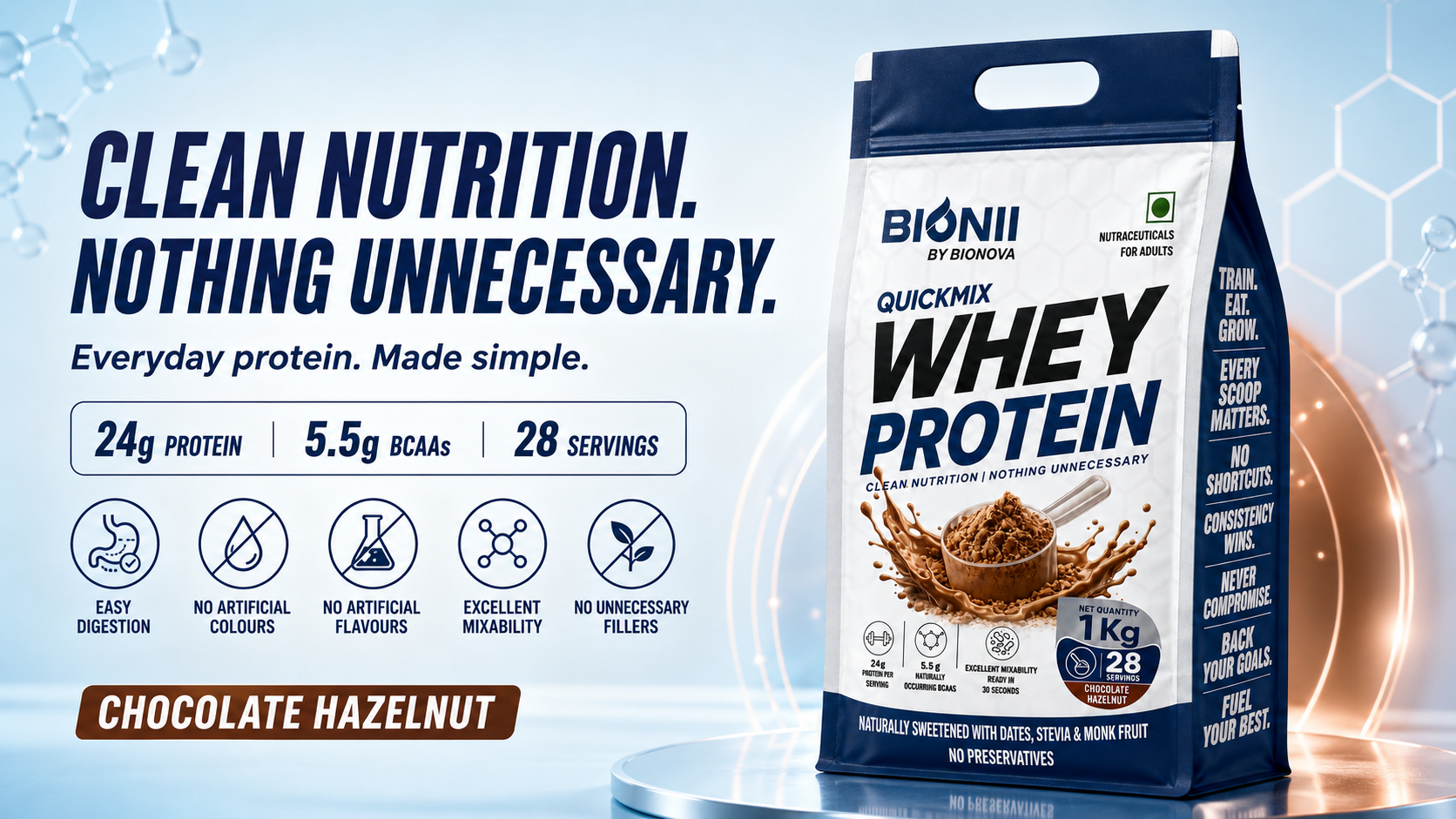
Bionii Quickmix Whey Protein is created for consumers seeking straightforward protein nutrition with a clean-label approach.
According to the product label, each 1 kg pouch provides:
-
24 g protein per serving
-
5.5 g naturally occurring BCAAs
-
28 servings
-
Excellent mixability
-
No artificial colours
-
No artificial flavours
-
No unnecessary fillers
-
No preservatives
-
Naturally sweetened with dates, stevia and monk fruit
It is available in Chocolate Hazelnut and Creamy Vanilla flavours.
These features make Bionii Quickmix a relevant option to consider when comparing clean whey protein products in India. Individual digestive tolerance still varies, so always follow the labelled directions and evaluate how the product suits you.
Explore Bionii Quickmix Whey Protein at Bionii.com.
Frequently Asked Questions
Which is the best whey protein for a sensitive stomach in India?
The best option depends on your lactose tolerance, ingredient preferences and serving size. Compare the whey source, protein per serving, sweeteners, additives, allergen statement, mixability and manufacturing information. No single product is guaranteed to suit everyone.
Is whey protein isolate better for a sensitive stomach?
Whey isolate generally contains less lactose than whey concentrate, so some lactose-sensitive consumers may find it more comfortable. However, isolate is still milk-derived and individual tolerance varies.
Can whey protein cause gas and bloating?
Yes, some people may experience gas or bloating. Possible causes include lactose sensitivity, a large serving, drinking quickly, added ingredients or combining whey with milk and other foods.
Can I use whey protein if I am lactose intolerant?
Some people with lactose intolerance tolerate small amounts of lactose, while others do not. A lower-lactose whey isolate may suit some individuals, but check the label and discuss persistent symptoms with a doctor or dietitian.
Is whey protein suitable for milk allergy?
Whey is a milk protein. People with a diagnosed or suspected milk allergy should avoid self-testing whey products and seek medical guidance.
How can I reduce bloating after a whey protein shake?
Use the labelled serving, mix with water, drink slowly and avoid adding several ingredients at once. If symptoms continue, stop using the product and consult a healthcare professional.
Are digestive enzymes necessary in whey protein?
Not for everyone. Digestive enzymes may be included in some products, but their presence does not guarantee comfort or product quality. The complete formulation and individual tolerance remain important.
Does more protein per scoop mean a better product?
Not automatically. Evaluate total protein per serving, ingredient transparency, calories, serving size, digestibility and how the product fits your daily diet.
Can women and older adults take whey protein?
Whey protein is not limited to male gym-goers. It can help adults increase protein intake when appropriate, but requirements vary with age, activity, diet and medical history. Older adults and people with medical conditions should seek personalised advice.
When should I see a doctor about digestive symptoms?
Seek medical advice if symptoms are persistent, severe or accompanied by significant abdominal pain, repeated vomiting, prolonged diarrhoea, blood in the stool, unexplained weight loss, facial swelling or breathing difficulty.
Final Verdict
The best whey protein for a sensitive stomach in India is not necessarily the most expensive tub, the most famous imported brand or the product with the largest scoop.
Look for a clearly identified protein source, useful protein per serving, clean and transparent ingredients, good mixability, complete labelling and a serving size that suits your needs. Start simply, assess your tolerance and avoid assuming that discomfort is a normal price to pay for better nutrition.
A protein powder should support consistency. If every shake makes you feel uncomfortable, reconsider the product, the serving or the way you prepare it.
Disclaimer: This article is for general educational purposes and does not replace medical advice, diagnosis or treatment. Individual protein requirements and digestive tolerance vary. Consult a doctor or registered dietitian if you have persistent digestive symptoms, milk allergy, kidney disease, liver disease, pregnancy-related dietary questions or another medical condition.


