

Cart
0
Meal Replacement Shake for Weight Loss
Trying to lose weight often becomes difficult for one simple reason: everyday meals are not always easy to plan, portion or track. Busy schedules, large dinner portions, frequent snacking and low-protein meals can gradually push calorie intake above what the body needs.
A meal replacement shake for weight loss offers a convenient way to replace one regular meal with a measured serving of protein and other nutrients. It is not a magic fat-burning drink. Its value lies in making portion control simpler, supporting fullness and helping you follow a calorie-controlled eating plan more consistently.
This guide explains how a meal replacement powder for weight loss works, how it differs from ordinary protein powder, what to check before buying one and how to use it sensibly as part of a healthy lifestyle.
What Is a Meal Replacement Shake?
A meal replacement shake is formulated to replace a conventional meal such as breakfast, lunch or dinner. It usually combines protein with carbohydrates, fats, vitamins, minerals and selected functional ingredients in a measured serving.
Unlike a snack drink, a properly formulated meal replacement is intended to provide broader nutrition while making calorie and portion control more convenient. You mix the recommended quantity of powder with water or another liquid according to the product directions.
The key word is replacement. Drinking a shake in addition to your usual meal increases your overall calorie intake and may work against a weight-loss goal.
Can a Meal Replacement Shake Help With Weight Loss?
Yes, a meal replacement shake may support weight loss when it helps you maintain a calorie deficit—the state in which you consume fewer calories than your body uses. It can do this by replacing an unplanned or calorie-heavy meal with a measured portion.
Meal replacements may be useful because they can:
-
simplify portion control;
-
provide a known serving size;
-
increase protein intake compared with a low-protein meal;
-
help reduce the temptation to order calorie-dense convenience food;
-
make a structured weight-management routine easier to follow.
Research has found that structured meal-replacement programmes can support weight management for some adults. Results, however, vary with total food intake, activity, sleep, medical status and long-term adherence. A shake cannot compensate for overeating during the rest of the day.
Meal Replacement Shake vs Protein Shake: What Is the Difference?
People frequently search for a protein shake for weight loss, but protein powder and meal replacement powder are not automatically the same.
| Feature | Meal replacement shake | Regular protein shake |
|---|---|---|
| Main purpose | Replace a complete meal | Supplement daily protein intake |
| Typical composition | Protein plus other macronutrients and micronutrients | Primarily protein |
| Portion control | Designed around a measured meal serving | Serving may function as a snack or supplement |
| Best use | Breakfast, lunch or dinner replacement as directed | Post-workout, between meals or to meet protein needs |
A protein powder may be rich in protein yet too limited in other nutrients to serve as a complete meal. If your objective is to replace a meal, choose a product specifically labelled and formulated for meal replacement.
Why Protein Matters During Weight Loss
Protein is especially useful in a weight-management diet because it supports satiety and helps maintain lean muscle when calorie intake is reduced. Preserving lean mass matters because healthy weight loss should focus primarily on reducing excess body fat—not simply making the number on the weighing scale fall.
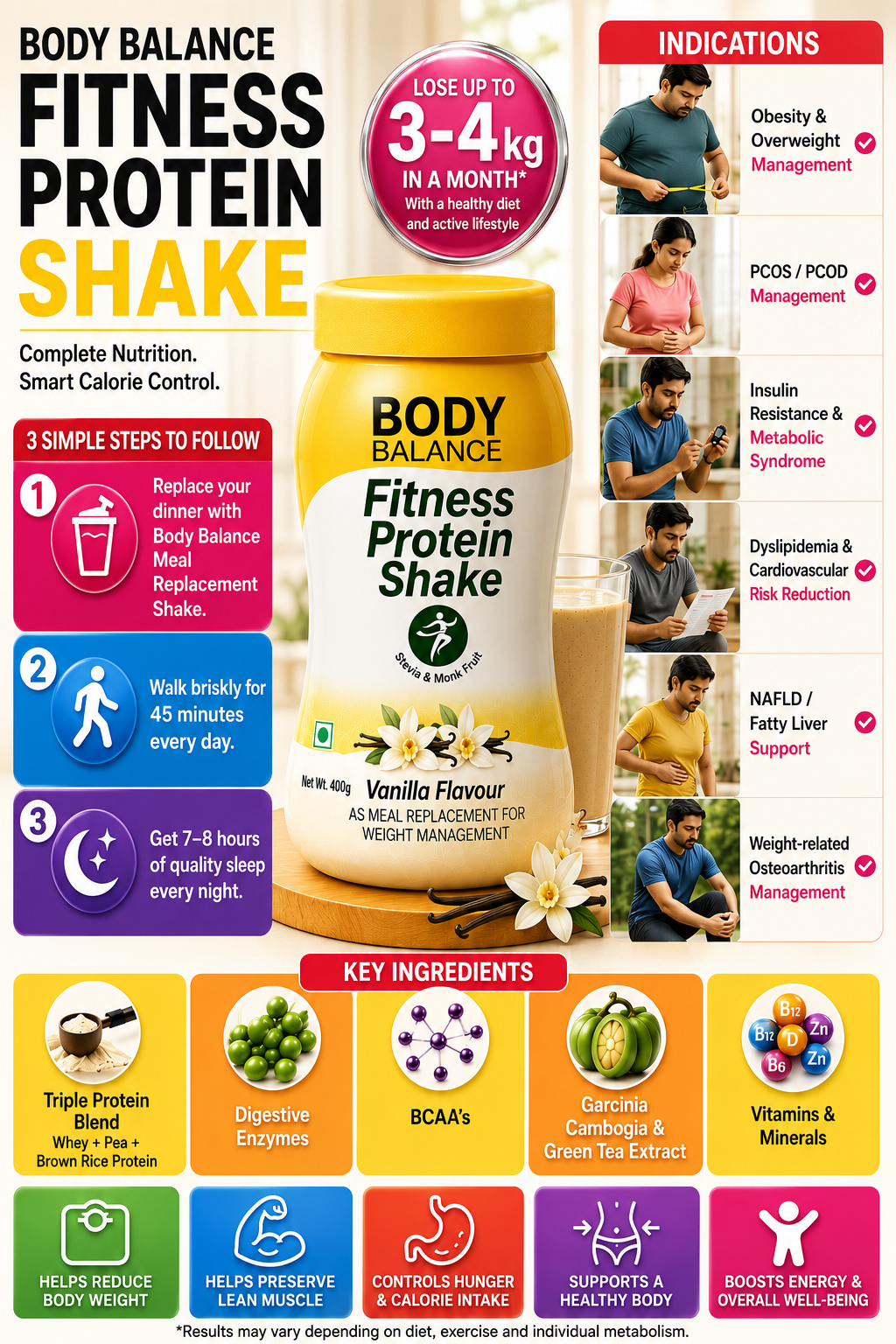
Body Balance Fitness Protein Shake contains a triple protein blend of whey protein, pea protein and brown rice protein. This combines dairy and plant protein sources in one formula. Always check the product label for the exact protein quantity per serving and follow the recommended preparation instructions.
What Should You Look for in the Best Meal Replacement Shake?
The “best meal replacement shake for weight loss” is not necessarily the one with the loudest promise. Look for a formula and serving pattern that fits your nutritional needs and is practical enough to use consistently.
1. Meaningful protein content
Protein can help a meal feel more satisfying and supports lean muscle. Compare the protein provided per recommended serving, not merely the list of protein ingredients on the front of the pack.
2. A transparent nutrition panel
Check calories, protein, carbohydrates, total sugars, added sugars, fat, fibre, sodium, vitamins and minerals per serving. A trustworthy choice makes these values easy to find and understand.
3. Sensible calorie control
A weight loss shake should help replace a higher-calorie meal without becoming nutritionally empty. Very low calories alone do not make a product complete or suitable for continued use.
4. Vitamins and minerals
Because the product replaces a meal, micronutrients are relevant. Body Balance includes vitamins and minerals as part of its meal-replacement formulation. Refer to the label for the full nutrient list and contribution per serving.
5. Digestive suitability
Body Balance includes digestive enzymes. Individual tolerance can still differ, especially for people sensitive to milk ingredients, sweeteners or particular plant ingredients.
6. Taste and convenience
Consistency matters more than a short burst of perfection. A convenient vanilla-flavoured shake that fits your daily routine may be easier to sustain than a complicated diet you stop following after a week.
Body Balance Fitness Protein Shake: Key Formula Features
Body Balance is a vanilla-flavoured meal replacement powder for weight management designed to combine nutrition with convenient calorie control.
Its highlighted formula features include:
-
triple protein blend: whey, pea and brown rice protein;
-
digestive enzymes;
-
BCAAs;
-
Garcinia cambogia and green tea extract;
-
added vitamins and minerals;
-
stevia and monk fruit;
-
convenient measured meal replacement format.
These ingredients do not make the product a treatment for obesity, PCOS, diabetes, insulin resistance, fatty liver, high cholesterol or any other disease. People with a diagnosed health condition should use a meal replacement only with guidance from a doctor or qualified dietitian.
How to Use a Meal Replacement Shake for Weight Loss
For many people, replacing one meal a day is a practical starting point. Use only the serving size and mixing directions printed on the pack.
A simple routine may look like this:
-
Choose one meal that is usually difficult to control—often breakfast or dinner.
-
Replace that meal with one recommended serving of Body Balance; do not consume the usual meal as well.
-
Keep your other meals balanced with vegetables, whole-food protein, fibre-rich carbohydrates and healthy fats.
-
Drink adequate water throughout the day.
-
Include regular physical activity, such as brisk walking, according to your ability and medical advice.
-
Aim for consistent, good-quality sleep.
Do not replace every meal with shakes unless you are following a medically supervised programme. Whole foods remain important for dietary variety, fibre and a sustainable relationship with food.
Is Dinner the Best Meal to Replace?
Dinner can be a practical choice if evening meals are routinely large, late or driven by food delivery. Replacing dinner with a measured shake may reduce decision fatigue and make portion control easier.
However, the best meal to replace is personal. If you regularly skip breakfast and then snack heavily, a planned breakfast replacement may suit you better. If lunch meetings lead to overeating, lunch may be the more useful target.
Choose the meal where a structured alternative will create the greatest improvement without making your day difficult to sustain.
Common Mistakes to Avoid
Drinking the shake alongside a full meal
This adds calories instead of controlling them. Use it as a meal replacement, not automatically as a meal add-on.
Ignoring the preparation directions
Adding sugar, ice cream, large amounts of nut butter or sweetened milk can substantially increase calories.
Eating too little all day
Extreme restriction may lead to fatigue, cravings and rebound overeating. Weight management works better with a balanced, sustainable calorie deficit.
Expecting spot reduction
No shake can selectively reduce belly fat. Changes in body fat occur through overall energy balance, activity, nutrition and individual biology.
Depending only on the weighing scale
Body weight can fluctuate because of water, salt intake, digestion and hormonal changes. Consider waist measurements, how clothes fit, strength, energy and consistency alongside weight.
Treating a supplement as medicine
A meal replacement does not diagnose, prevent, cure or treat disease. Medical conditions require individual assessment and care.
How Much Weight Can You Lose With Meal Replacement Shakes?
There is no responsible way to guarantee a fixed number of kilograms for everyone. Weight-loss rate varies according to starting weight, calorie intake, movement, sleep, medicines, hormones, health conditions and adherence.
Sustainable progress is usually more valuable than rapid loss followed by regain. If your weight changes suddenly, you feel weak or dizzy, or your eating pattern becomes overly restrictive, stop and consult a healthcare professional.
Who Should Consult a Doctor Before Using a Meal Replacement?
Seek professional advice before use if you:
-
are pregnant or breastfeeding;
-
are under 18 years of age;
-
have diabetes or take blood-glucose-lowering medicine;
-
have kidney, liver, heart or gastrointestinal disease;
-
have PCOS or another hormonal condition requiring treatment;
-
take prescription medicines;
-
have food allergies or intolerances;
-
have a history of an eating disorder;
-
are preparing for or recovering from surgery.
Check the complete ingredient and allergen declaration on the current product pack before use.
Frequently Asked Questions
Which meal replacement shake is best for weight loss?
Choose one specifically formulated as a meal replacement, with a clear nutrition panel, meaningful protein, suitable calories, vitamins and minerals, and ingredients you tolerate. The best option is one that fits your health needs and can be used consistently within a balanced calorie-controlled plan.
Can I drink a meal replacement shake every day?
Many adults use one meal replacement daily, but suitability depends on the formula, the rest of the diet and individual health. Follow the pack directions and seek professional advice if you have a medical condition or take medication.
Is a meal replacement shake good for belly fat loss?
It cannot target belly fat specifically. It may support overall fat loss if replacing a higher-calorie meal helps create a sustained calorie deficit.
Can I replace dinner with a protein shake for weight loss?
Use a product formulated as a meal replacement rather than assuming an ordinary protein powder is nutritionally adequate for dinner. Follow its recommended serving and keep the rest of your diet balanced.
Can women use meal replacement shakes for weight loss?
Meal replacements may be used by suitable adult women, but requirements vary. Pregnancy, breastfeeding, PCOS, diabetes, thyroid disorders, medication use and other medical factors should be discussed with a doctor or dietitian.
Can men use a weight loss shake?
Yes, suitable adult men may include a meal replacement in a calorie-controlled plan. Serving needs and total calorie requirements differ by body size, activity and goals.
Should I mix meal replacement powder with water or milk?
Follow the directions printed on the product. Milk changes the calories, protein and carbohydrate content of the prepared shake; sweetened milk can increase sugar and total calories.
When is the best time to drink a meal replacement shake?
Use it at the meal you most need help controlling. Regular timing can make the routine easier, but total daily nutrition and calorie intake matter more than a special time of day.
Are meal replacement shakes safe for PCOS?
PCOS needs individual medical and dietary management. A shake may sometimes fit into a clinician-approved weight-management plan, but it does not treat PCOS. Discuss the ingredients and nutrition panel with your doctor or dietitian.
Do I still need to exercise?
Physical activity supports fitness, heart health, muscle maintenance and long-term weight management. Choose activity appropriate for your ability and seek medical advice before beginning a new programme if you have health concerns.
The Bottom Line
A meal replacement shake for weight loss works best as a practical portion control tool, not a shortcut or disease treatment. When one planned meal is replaced with a measured serving, while the rest of the day includes balanced food, adequate water, regular activity and sufficient sleep, it may make a weight-management routine simpler to follow.
Body Balance Fitness Protein Shake combines whey, pea and brown rice protein with digestive enzymes, BCAAs, selected botanical extracts, vitamins and minerals in a convenient vanilla-flavoured meal replacement.
Use it exactly as directed on the label. For personalised weight-loss advice or any existing medical condition, speak with a doctor or registered dietitian.
Call to action: Explore Body Balance Fitness Protein Shake and take a more structured approach to daily calorie control and weight management.


