

Cart
0
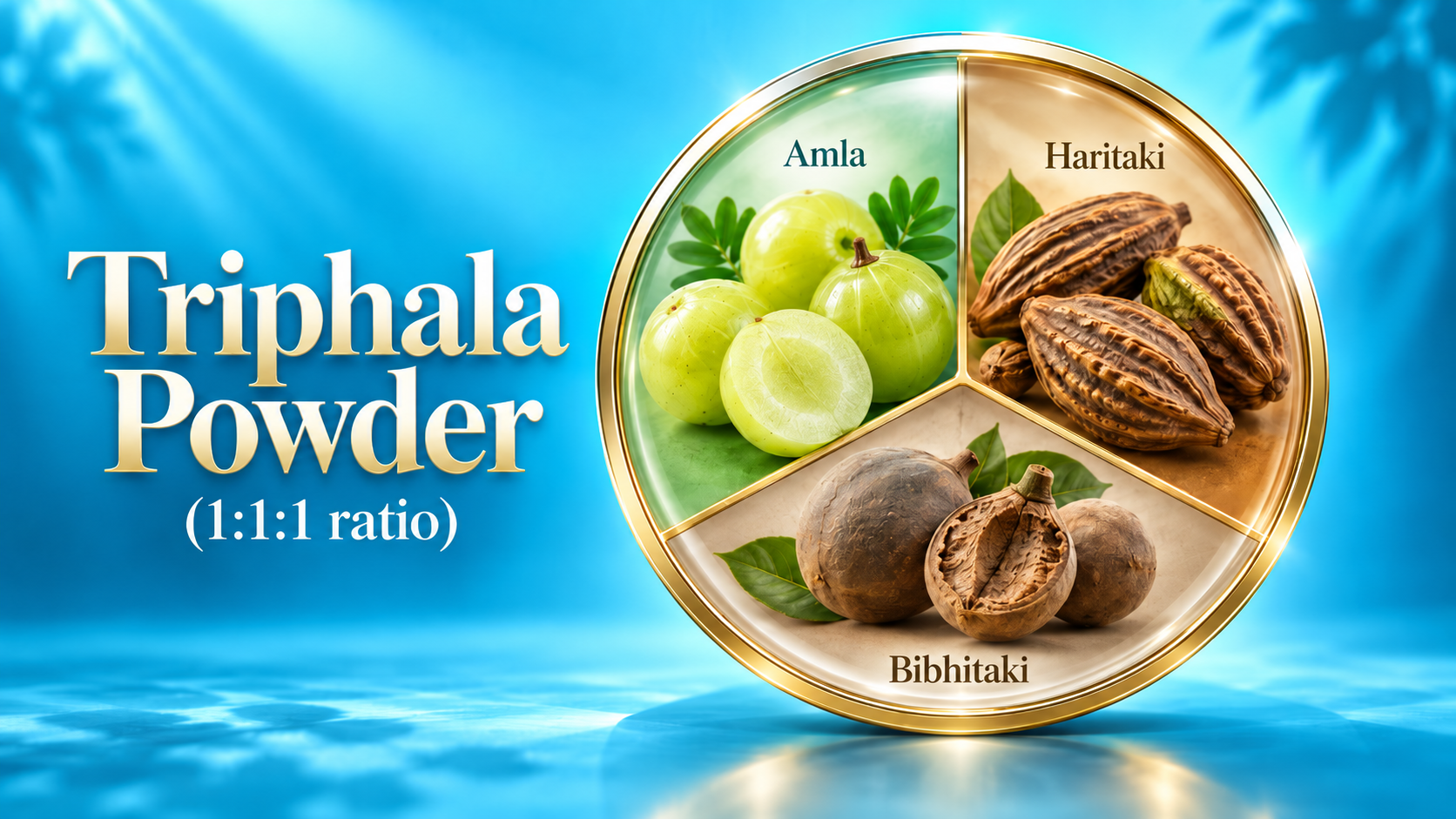
Few herbal formulations in the world command the clinical reverence that Triphala has held for over two millennia. Celebrated in foundational Ayurvedic texts like the Charaka Samhita and Sushruta Samhita, Triphala is categorized as a prime Rasayana—a therapeutic formula capable of slowing biological aging, balancing metabolic pathways, and restoring gastrointestinal integrity.
Yet, despite its widespread popularity, not all Triphala powders deliver the results promised in ancient manuscripts. The efficacy of this herbal blend depends entirely on three often-overlooked variables: fruit purity, ratio precision, and processing methodology.
Quick Summary:
-
Formula: Equal 1:1:1 ratio of Amalaki, Bibhitaki, and Haritaki.
-
Key Benefit: Non-stimulant digestive regularity, antioxidant protection, and colon detox.
-
Optimal Use: 1/2 to 1 teaspoon in warm water 30 minutes before sleep.
1. What is Triphala Powder? (The Sacred 3-Fruit Formula)
The Sanskrit word Triphala translates directly to "three fruits." It combines three wild-harvested myrobalan fruits native to the Indian subcontinent, each bringing a distinct chemical and pharmacological profile:

The Three Sacred Fruits
-
Amalaki (Emblica officinalis / Indian Gooseberry): A potent whole-food source of stable Vitamin C, gallic acid, and ellagitannins. In Ayurveda, Amalaki carries a cooling energy (Sheeta virya) that pacifies excess heat and inflammation.
-
Bibhitaki (Terminalia bellirica): Packed with tannins, chebulagic acid, and beta-sitosterol. It acts as an astringent and mild expectorant, targeting stagnant mucus, lymph congestion, and sluggish metabolic waste.
-
Haritaki (Terminalia chebula): Known in Tibetan medicine as the "King of Medicines." It contains chebulinic acid and anthraquinones that nourish the colon wall while encouraging peristaltic movement.
The Tridoshic Balance: Vata, Pitta, and Kapha
Unlike targeted single-herb interventions that might provoke or deplete specific body constitutions, classical Ayurveda honors Triphala because it is Tridoshic—it balances all three functional bodily energies simultaneously:
| Dosha | Governs | Balancing Fruit in Triphala | Primary Action |
| Pitta | Fire & Metabolism | Amalaki | Cools gastric heat, shields mucosa, calms acid |
| Kapha | Water, Mucus & Structure | Bibhitaki | Breaks down lipid build-up, clears stagnant toxins |
| Vata | Air, Movement & Nervous System | Haritaki | Regulates downward elimination (Apana Vayu), nourishes tissue |
2. The 7 Proven Benefits of Triphala Powder
Modern clinical and in vitro research increasingly validates the traditional uses of this compound formula:
1. Natural Regularity Without Dependency
Most synthetic and even herbal laxatives rely on harsh stimulants (like senna or cascara) that irritate the intestinal lining and cause long-term lazy bowel syndrome. Triphala works differently: Haritaki tones and contracts the intestinal muscles, Amalaki lubricates the mucosal barrier, and Bibhitaki gently scrapes mucus buildup. You achieve smooth, predictable bowel movements without gut habituation.
2. Gentle Colon Cleansing & Microbiome Support
Triphala behaves as a natural prebiotic. Its polyphenols survive gastric acid, reaching the colon where beneficial bacterial strains like Bifidobacteria and Lactobacillus feed on them while inhibiting pathogenic organisms.
3. Metabolic Optimization & Weight Support
Studies reveal that active components like gallic acid and chebulic acid stimulate adiponectin production and help suppress carbohydrate-digesting enzymes. This moderates glucose spikes, curbs sugar cravings, and assists visceral fat reduction.
4. High-Density Antioxidant Defense
Combining three rich antioxidant reservoirs makes Triphala a powerful scavenger of free radicals. It shields cellular DNA from oxidative damage caused by chronic stress, UV exposure, and environmental pollutants.
5. Clear Skin & Scalp Vitality
Healthy skin begins in the digestive tract. By improving internal elimination, Triphala limits toxin accumulation in the blood. Topically and internally, Amalaki’s natural bioflavonoids stimulate collagen synthesis, while Bibhitaki reduces sebum oxidation.
6. Classical Eye Support (Netra Rasayana)
In classical protocols, Triphala is used to maintain visual clarity and relieve ocular strain caused by screen fatigue. It protects against oxidative damage within retinal and lens tissues.
7. Liver and Gallbladder Decongestant
By binding to intestinal toxins before they can re-enter hepatic circulation, Triphala reduces the liver’s metabolic processing load and encourages healthy bile release.
3. The Quality Checklist: Why Most Commercial Triphala Fails
The surge in commercial wellness demand has led to industrial short-cuts. Most store-bought Triphala is a brown, bitter, largely inert powder that causes stomach cramps rather than gentle cleansing. Understanding these compromises highlights why Bionii Triphala Powder sets a higher production standard:

Why Seedless Amla Matters
The therapeutic bioactive components of Amla reside almost exclusively in the fleshy outer pulp (pericarp). The inner seed is largely woody fiber, heavy lignins, and astringent tannins with minimal therapeutic yield.
-
The Commercial Flaw: Industrial processors run whole dry Amla berries directly through heavy pulverizers because removing seeds takes time and drops net yield by 30–40%.
-
The Clinical Consequence: Pulverized seeds introduce insoluble, irritating grit and rancid seed oils that can cause sharp intestinal cramps and nausea.
-
The Bionii Difference: Bionii uses 100% deseeded Amla rind, ensuring every gram delivers active, water-soluble bioactives rather than indigestible seed bulk.
The Sacred 1:1:1 Classical Ratio vs. Commercial Cost-Cutting
Traditional Ayurvedic treatises specifically prescribe an equal 1:1:1 ratio of Amalaki, Bibhitaki, and Haritaki to maintain physiological equilibrium:
Because Haritaki and Bibhitaki are harder to source and significantly more expensive than Amla, mass-market manufacturers quietly alter the ratio—sometimes skewing it to 3:1:1 or 4:1:1. Skewing the ratio breaks Tridoshic balance, turning a balanced rasayana into an overly sour, acid-aggravating powder. Bionii adheres strictly to the authentic 1:1:1 ratio.
Sun-Dried vs. Shade-Dried: Preserving Phytochemicals
How the fruits are dried dictates their potency:
-
Open Sun-Drying / Industrial Kiln Drying: Direct exposure to harsh solar UV rays and elevated kiln heat denatures sensitive polyphenols, destroys up to 70% of heat-labile Vitamin C, and oxidizes delicate gallotannins. It leaves the powder dull, blackened, and depleted.
-
Controlled Shade-Drying (Bionii Standard): Bionii utilizes slow, low-temperature, indoor shade-drying in dehumidified rooms. This process retains the natural pale-olive/greenish hue of living plant tissue, preserves chlorophyll, and locks in peak antioxidant potency.
4. How to Take Triphala Powder (Dosage & Timing)
Because Triphala adapts to the delivery medium (Anupana), your timing and choice of liquid determine its therapeutic effect:
| Primary Goal | Ideal Timing | Optimal Anupana (Carrier) | Recommended Dose |
| Bowel Regularity & Digestion | 30–45 mins before bedtime | Warm water | 1/2 to 1 level teaspoon |
| Rasayana (Rejuvenation & Immunity) | First thing upon waking | Raw organic honey or warm A2 ghee | 1/2 teaspoon |
| Weight Management & Metabolism | 20 mins before morning breakfast | Warm water with a slice of lemon | 1/2 to 1 teaspoon |


