

Cart
0
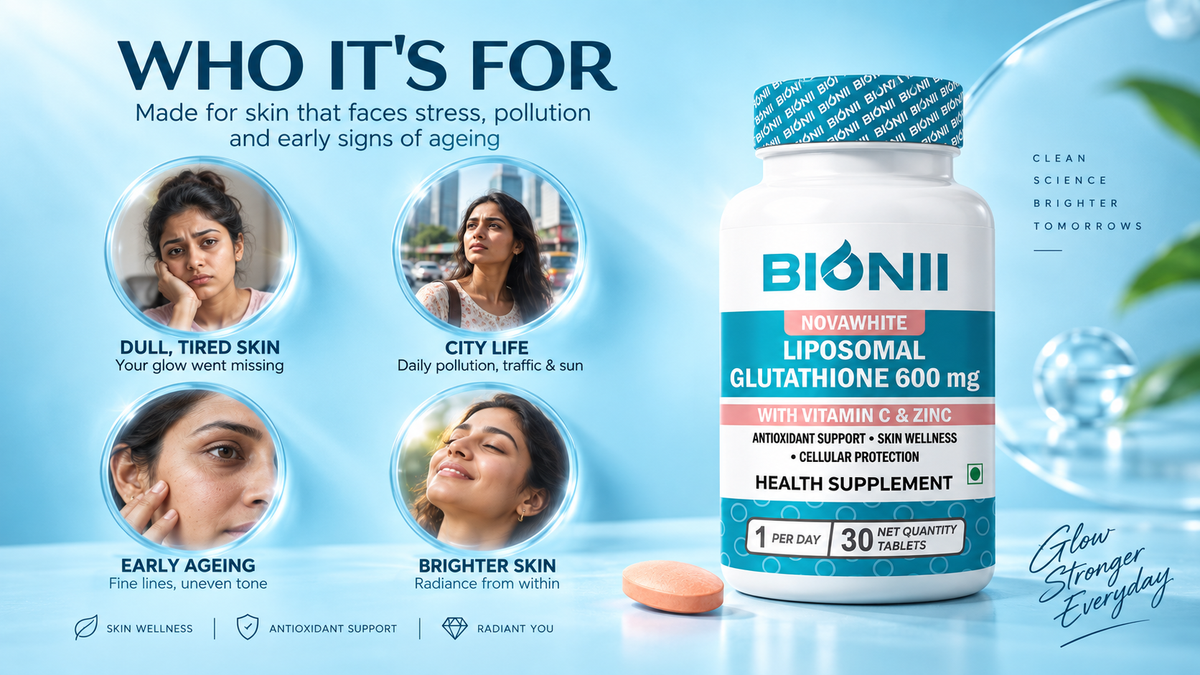
Liposomal Glutathione vs Regular Glutathione: What’s the Difference?
Liposomal glutathione differs from regular glutathione mainly in its delivery system. Regular glutathione is supplied directly in conventional tablets, capsules or powders, while liposomal glutathione uses phospholipid-based carriers designed to protect glutathione during digestion and potentially improve its bioavailability. However, absorption depends on the specific formulation and not every liposomal product performs equally.
Glutathione has become one of the most talked-about antioxidants in the wellness and skincare supplement category. It is naturally produced in the human body and plays an important role in protecting cells from oxidative stress.
As interest in glutathione supplements grows, consumers often come across two common options: regular glutathione and liposomal glutathione.
So, what exactly is the difference between liposomal glutathione and regular glutathione? Is liposomal glutathione absorbed better? And which form should you choose?
This guide explains the difference in simple terms.
What Is Glutathione?
Glutathione is a naturally occurring antioxidant made from three amino acids:
- Glutamic acid
- Cysteine
- Glycine
It is present in almost every cell of the body and contributes to the body's natural antioxidant defence system.
Glutathione is commonly associated with:
- Antioxidant protection
- Protection against oxidative stress
- Cellular wellness
- Normal detoxification processes
- Immune function
- Skin wellness
The body naturally produces glutathione, but levels can be influenced by factors such as age, diet, lifestyle, oxidative stress and overall nutritional status.
This is one reason glutathione is increasingly used as a dietary supplement.
What Is Regular Glutathione?
Regular oral glutathione supplements generally contain glutathione in a conventional tablet, capsule or powder formulation.
One of the most commonly used forms is reduced glutathione, often written as L-Glutathione or GSH.
After you swallow a conventional glutathione supplement, it travels through the digestive system before its components can be absorbed.
The digestive environment can influence the stability and availability of certain nutrients. For this reason, supplement manufacturers have developed different delivery technologies designed to improve the way glutathione is delivered through the gastrointestinal tract.
One of these technologies is liposomal delivery.
What Is Liposomal Glutathione?
Liposomal glutathione is glutathione incorporated into or associated with microscopic structures known as liposomes.
Liposomes are tiny spherical structures primarily made from phospholipids.
Phospholipids are similar to the lipid components naturally found in cell membranes.
A simplified way to understand liposomal technology is:
Glutathione = the active nutrient
Liposome = the delivery system surrounding or carrying the nutrient
This lipid-based delivery system is designed to help protect the ingredient as it passes through the digestive system and potentially improve its delivery and absorption.
Liposomal Glutathione vs Regular Glutathione
The main difference between the two forms is therefore not necessarily the glutathione itself—it is the delivery technology.
| Feature | Regular Glutathione | Liposomal Glutathione |
|---|---|---|
| Active ingredient | Usually reduced glutathione/GSH | Usually reduced glutathione/GSH |
| Delivery system | Conventional | Phospholipid/liposomal carrier |
| Digestive protection | Depends on formulation | Designed to provide additional protection |
| Bioavailability | Formulation dependent | Potentially enhanced; evidence varies by formulation |
| Phospholipids | Usually absent | Present |
| Form | Capsules/tablets/powders | Liquids, capsules or powders depending on technology |
| Cost | Generally lower | Generally higher |
| Key buying consideration | Dose + quality | Dose + actual liposomal technology + stability + quality |
Why Is Absorption Important?
A supplement only becomes useful after its nutrients are made available to the body.
When an oral supplement is consumed, several steps occur:
- The tablet or capsule breaks down.
- The ingredient enters the gastrointestinal environment.
- The nutrient must remain sufficiently stable.
- It needs to cross the intestinal barrier.
- It then enters circulation or undergoes further metabolism.
Certain nutrients can be sensitive to conditions within the digestive system.
Liposomal formulations are developed to address some of these challenges by using phospholipid structures as delivery vehicles.
However, it is important to understand that actual absorption depends on the complete formulation, not simply whether the word "liposomal" appears on the label.
The quality of the liposomes, manufacturing process, particle characteristics, phospholipid composition and stability of the finished product can all influence performance.
Is Liposomal Glutathione Better Absorbed?
Liposomal technology is specifically designed to enhance the delivery of nutrients that may otherwise face absorption or stability challenges.
Some research suggests that liposomal formulations may help improve glutathione bioavailability compared with certain conventional oral formulations.
However, absorption can vary substantially depending on the product formulation and individual factors.
Therefore, it is more accurate to say:
Liposomal glutathione is designed for enhanced delivery and potentially improved bioavailability rather than assuming that every liposomal product is automatically superior.
Consumers should look at the entire product formulation rather than choosing solely on the basis of the word "liposomal."
What Does "Bioavailability" Mean?
Bioavailability describes how much of an ingested substance becomes available for the body to use.
For example, two supplements may each contain 600 mg of glutathione, but the way that glutathione is formulated and delivered may influence how effectively it becomes available after consumption.
This is why supplement technology increasingly focuses not only on the quantity of an ingredient but also on its delivery system.
Why Are Phospholipids Used in Liposomal Supplements?
Liposomes are generally created using phospholipids.
Phospholipids have both water-attracting and fat-attracting properties, allowing them to naturally form microscopic structures capable of carrying different nutrients.
Because human cell membranes also contain phospholipids, liposomal systems are widely studied and used in pharmaceutical, nutritional and cosmetic delivery technologies.
In dietary supplements, liposomal technology is used for ingredients such as:
- Glutathione
- Vitamin C
- Curcumin
- Certain vitamins
- Botanical compounds
The goal is generally to improve stability, dispersion or delivery.
Liposomal Glutathione for Skin Wellness
Glutathione has attracted considerable attention within the beauty-from-within and skin wellness categories because of its antioxidant activity.
Oxidative stress can be generated by several everyday factors, including environmental exposure, pollution and normal metabolic processes.
Antioxidants help protect cells against oxidative stress.
Because glutathione forms part of the body's natural antioxidant defence system, glutathione supplementation is increasingly included in nutritional products positioned for skin wellness and antioxidant support.
However, glutathione supplements should not be considered substitutes for sunscreen, a balanced diet or appropriate skincare.
For healthy-looking skin, a complete routine remains important:
- Use broad-spectrum sunscreen regularly.
- Maintain adequate hydration.
- Eat fruits and vegetables rich in antioxidants.
- Consume sufficient dietary protein.
- Maintain a consistent skincare routine.
- Avoid excessive smoking and alcohol.
- Get adequate sleep.
A supplement should complement these habits rather than replace them.
What Should You Look for When Buying Liposomal Glutathione?
Not every glutathione supplement is formulated the same way.
When comparing products, consider the following factors.
1. Amount of Glutathione
Check the actual amount of glutathione provided per serving rather than judging the product only by the front-label claims.
2. Type of Glutathione
Look for clearly identified forms such as reduced L-glutathione.
3. Liposomal Delivery System
If the product claims to be liposomal, check whether the formulation clearly identifies the use of phospholipids or a liposomal delivery technology.
4. Supporting Nutrients
Some glutathione supplements include complementary nutrients such as Vitamin C and Zinc.
Vitamin C contributes to antioxidant protection and normal collagen formation, while zinc contributes to normal immune function and protection of cells from oxidative stress.
5. Manufacturing Quality
Choose supplements manufactured under appropriate quality-control systems and applicable food-safety standards.
6. Clear Labelling
A quality supplement should clearly display:
- Ingredient quantities
- Recommended serving
- Nutritional information
- Manufacturer details
- Batch information
- Expiry information
- Storage instructions
- Applicable regulatory licence details
Liposomal Glutathione or Regular Glutathione: Which Should You Choose?
There is no single answer suitable for everyone.
Regular glutathione may be suitable for consumers looking for a straightforward glutathione supplement at a more accessible price.
Liposomal glutathione may appeal to consumers looking for a more advanced delivery system designed to support ingredient stability and absorption.
Your choice should depend on:
- Formulation quality
- Glutathione dose
- Delivery technology
- Supporting ingredients
- Product quality
- Budget
- Individual nutritional requirements
The formulation as a whole is more important than simply choosing whichever product contains the largest number of milligrams.
Frequently Asked Questions
Is liposomal glutathione the same as glutathione?
The active ingredient is still glutathione. The main difference is the delivery system. Liposomal formulations use phospholipid-based structures designed to carry and protect the glutathione.
Is liposomal glutathione better than normal glutathione?
Liposomal technology is designed to improve nutrient delivery and may improve bioavailability in some formulations. However, product quality and formulation technology vary, so the term "liposomal" alone does not guarantee superior absorption.
What does reduced glutathione mean?
Reduced glutathione, also known as GSH, is the biologically active reduced form of glutathione commonly used in nutritional supplements.
Can glutathione be taken daily?
Glutathione supplements are commonly formulated for daily consumption. Users should follow the recommended serving stated on the product label or the advice of a qualified healthcare professional.
Can Vitamin C be taken with glutathione?
Yes. Vitamin C is commonly combined with glutathione in antioxidant supplement formulations.
Is glutathione only for skin?
No. Glutathione is primarily an antioxidant naturally produced throughout the body. Its biological role extends beyond skin and includes cellular antioxidant defence and other normal physiological processes.
Does more glutathione always mean better results?
Not necessarily. Dose is only one factor. Formulation quality, delivery technology, supporting nutrients, consistency of intake, diet and individual physiology may all influence outcomes.
Is reduced glutathione the same as liposomal glutathione?
No. Reduced glutathione refers to the active form of glutathione, commonly known as GSH, while liposomal glutathione refers to a delivery system. A liposomal supplement may contain reduced glutathione enclosed within phospholipid-based carriers called liposomes. In simple terms, “reduced” describes the form of glutathione, while “liposomal” describes how it is delivered.
Does liposomal glutathione contain phospholipids?
Yes, genuine liposomal glutathione formulations typically use phospholipids to form microscopic lipid-based structures called liposomes. These structures are designed to surround and protect glutathione during digestion and may help improve its delivery within the body. Common phospholipid sources include sunflower or soy lecithin.
Can liposomal glutathione come in capsule form?
Yes. Liposomal glutathione can be available as liquids, softgels, capsules or powders, depending on the manufacturing technology used. However, simply putting glutathione into a capsule does not make it liposomal. The product should use a properly developed phospholipid-based liposomal delivery system.
Why is liposomal glutathione more expensive?
Liposomal glutathione is generally more expensive because its manufacture involves additional formulation technology. Producing stable liposomes requires phospholipids, specialized processing and quality-control measures to ensure that glutathione is properly incorporated into the lipid delivery system. These extra manufacturing steps can increase the final product cost compared with conventional glutathione supplements.
How can you tell whether a glutathione supplement is genuinely liposomal?
Check the product label and ingredient list carefully. A genuine liposomal glutathione supplement should normally mention a liposomal or phospholipid delivery system and identify phospholipid ingredients such as sunflower lecithin or phosphatidylcholine. You can also look for clear information about the formulation technology, glutathione dosage, manufacturing quality and testing standards. Avoid assuming that every product marketed as “advanced absorption” is necessarily liposomal.
What is the difference between glutathione and L-glutathione?
In supplements, the terms glutathione and L-glutathione are often used to describe the same naturally occurring antioxidant molecule made from the amino acids glutamate, cysteine and glycine. The “L” refers to the naturally occurring configuration of its amino-acid components. Many supplements also specify reduced L-glutathione, or GSH, which is the active reduced form commonly used in dietary supplements.
The Bottom Line
The fundamental difference between liposomal glutathione and regular glutathione is the delivery system.
Regular glutathione uses a conventional oral formulation, whereas liposomal glutathione uses phospholipid-based technology designed to protect and deliver glutathione more effectively through the digestive system.
For consumers comparing glutathione supplements, the smartest approach is not simply to look for the highest dose.
Instead, evaluate:
Glutathione form + dosage + delivery technology + complementary nutrients + manufacturing quality.
A well-formulated glutathione supplement should be viewed as part of a broader approach to antioxidant nutrition, skin wellness and a healthy lifestyle.
Written by: Bionii Editorial Team
Scientific Review: Bionova Research Labs Pvt. Ltd. – R&D Team
Last Reviewed: September 2026
Disclaimer: This article is intended for general educational purposes only and is not intended to diagnose, treat, cure or prevent any disease. Dietary supplements should not be used as a substitute for a varied, balanced diet and healthy lifestyle. Consult a healthcare professional before using supplements if you are pregnant, breastfeeding, taking medication or have an existing medical condition.


