

Cart
0
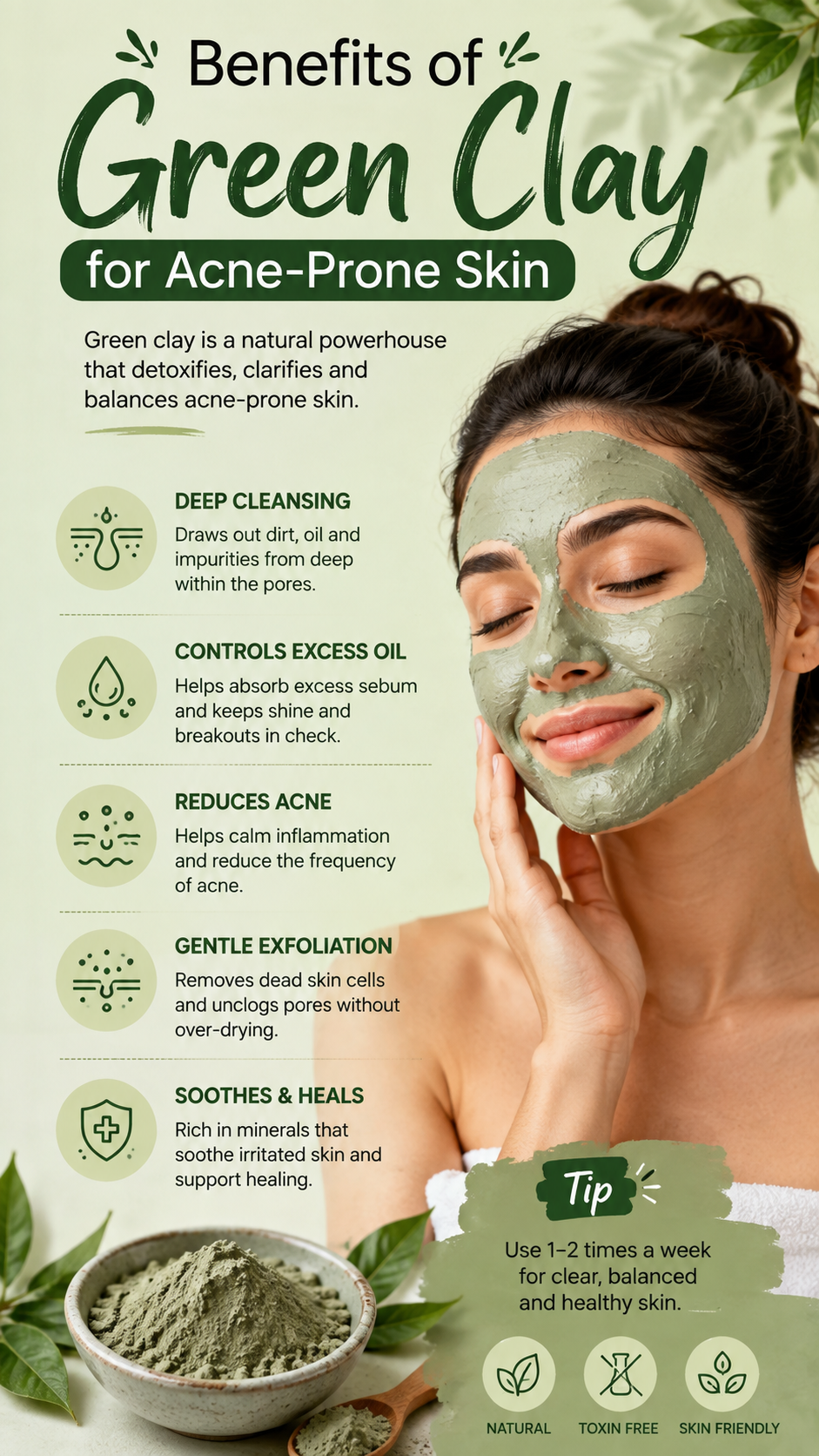
Benefits of Green Clay for Acne-Prone Skin | Pimple & Oily Skin Care
Acne-prone skin often produces excess oil and feels greasy soon after cleansing. It may also be more susceptible to clogged pores, blackheads and recurring breakouts. While no single skincare ingredient can cure acne, green clay can be a useful addition to a routine designed for oily and pimple-prone skin.
Known for its oil-absorbing and cleansing properties, green clay is commonly used in facial masks to remove excess sebum and surface impurities. When used correctly, it can leave the skin feeling cleaner, fresher and less oily without requiring harsh scrubbing.
What Is Green Clay?
Green clay is a naturally occurring mineral clay used in cosmetic and skincare formulations. Its characteristic green colour may come from naturally present minerals and decomposed plant matter, depending on its source.
Green clay has a fine texture and strong absorbent properties. This makes it particularly suitable for face masks intended for oily, combination and acne-prone skin. Once applied, the clay helps absorb excess oil and collect surface impurities. These can then be rinsed away with water.
Green clay should be viewed as a supportive skincare ingredient—not as a medical treatment for acne.
1. Helps Absorb Excess Oil
One of the main benefits of green clay for oily skin is its ability to absorb excess sebum. Sebum is the natural oil produced by the skin. Although it is necessary for maintaining the skin barrier, excessive sebum can make the face look greasy and contribute to congestion.
A green clay face mask can temporarily reduce surface oiliness, especially around the forehead, nose and chin. These areas, commonly called the T-zone, tend to become oily more quickly than other parts of the face.
Regular but moderate use can help the skin appear more balanced and less shiny.
2. Removes Surface Impurities
Throughout the day, sweat, pollution, makeup and skincare residue can accumulate on the skin. When these impurities combine with excess oil, they may contribute to clogged pores.
Green clay helps lift and remove surface impurities during rinsing. It can complement regular cleansing by giving oily skin a more thorough clean. However, it should not replace your everyday face cleanser.
Always remove makeup and sunscreen before applying a clay mask so that the clay can make better contact with the skin.
3. Supports Cleaner-Looking Pores
Pores can appear more noticeable when they contain excess oil, dead skin cells and debris. Green clay does not permanently reduce pore size, but its oil-absorbing action may make congested pores look cleaner and less prominent temporarily.
This can be especially helpful for people who experience blackheads or visible pores around the nose and inner cheeks. Consistent cleansing, sun protection and controlled exfoliation remain important for maintaining clearer-looking pores.
4. Provides Gentle Physical Exfoliation
The fine particles in green clay can provide mild physical exfoliation while the mask is being rinsed away. This helps remove loose dead skin cells and may leave the skin feeling smoother.
Avoid scrubbing the dried mask aggressively, particularly if you have active pimples or sensitive skin. Friction can increase redness and irritation. Use lukewarm water and gentle circular movements to rinse it away.
5. Leaves Oily Skin Feeling Fresh
Oily skin can sometimes feel heavy or unclean even after washing. A properly formulated green clay mask may provide a fresh, clean and mattified feeling after use.
This immediate result makes green clay popular before special occasions or during hot and humid weather. The effect is temporary, so it is important to maintain a balanced daily skincare routine instead of overusing clay masks.
How to Use Green Clay on Acne-Prone Skin
Begin with clean, dry skin. Apply a thin, even layer of the green clay mask, avoiding the eyes, lips and any broken or irritated areas.
Leave it on for the time stated on the product label. Do not assume that allowing the mask to become completely dry and cracked will provide better results. Excessive drying can leave the skin feeling tight and uncomfortable.
Rinse thoroughly with lukewarm water and pat the skin dry. Follow with a lightweight, non-comedogenic moisturiser to help maintain the skin barrier.
For most people, using a green clay mask once or twice a week is sufficient. If your skin feels tight, flaky or irritated, reduce the frequency or discontinue use.
Important Precautions
Perform a patch test before using a new green clay product, especially if your skin is sensitive. Do not apply it over open pimples, cuts, sunburn or inflamed skin.
Avoid combining a clay mask in the same routine with strong exfoliating acids, facial scrubs or irritating acne products unless advised by a dermatologist. Using too many oil-removing products may damage the skin barrier and sometimes lead to increased irritation.
Choose a green clay mask from a reputable brand and check the complete ingredient list. Fragrances, essential oils or other added ingredients may not suit every skin type.
Can Green Clay Cure Acne?
Green clay cannot cure acne or replace treatment prescribed by a qualified healthcare professional. It mainly helps manage excess surface oil and impurities, making it a useful supporting step for some people with oily and acne-prone skin.
Persistent, painful, cystic or scarring acne requires professional attention. A dermatologist can identify the underlying cause and recommend suitable treatment.
Final Thoughts
Green clay can be a valuable addition to an oily and acne-prone skincare routine. Its ability to absorb excess oil, remove surface impurities, provide gentle exfoliation and support cleaner-looking pores can help the skin feel fresh and balanced.
The key is moderation. Use green clay gently, moisturise afterwards and combine it with daily cleansing and broad-spectrum sunscreen. Think of it as supportive care for oily and pimple-prone skin—not as a standalone acne treatment.


