

Cart
0
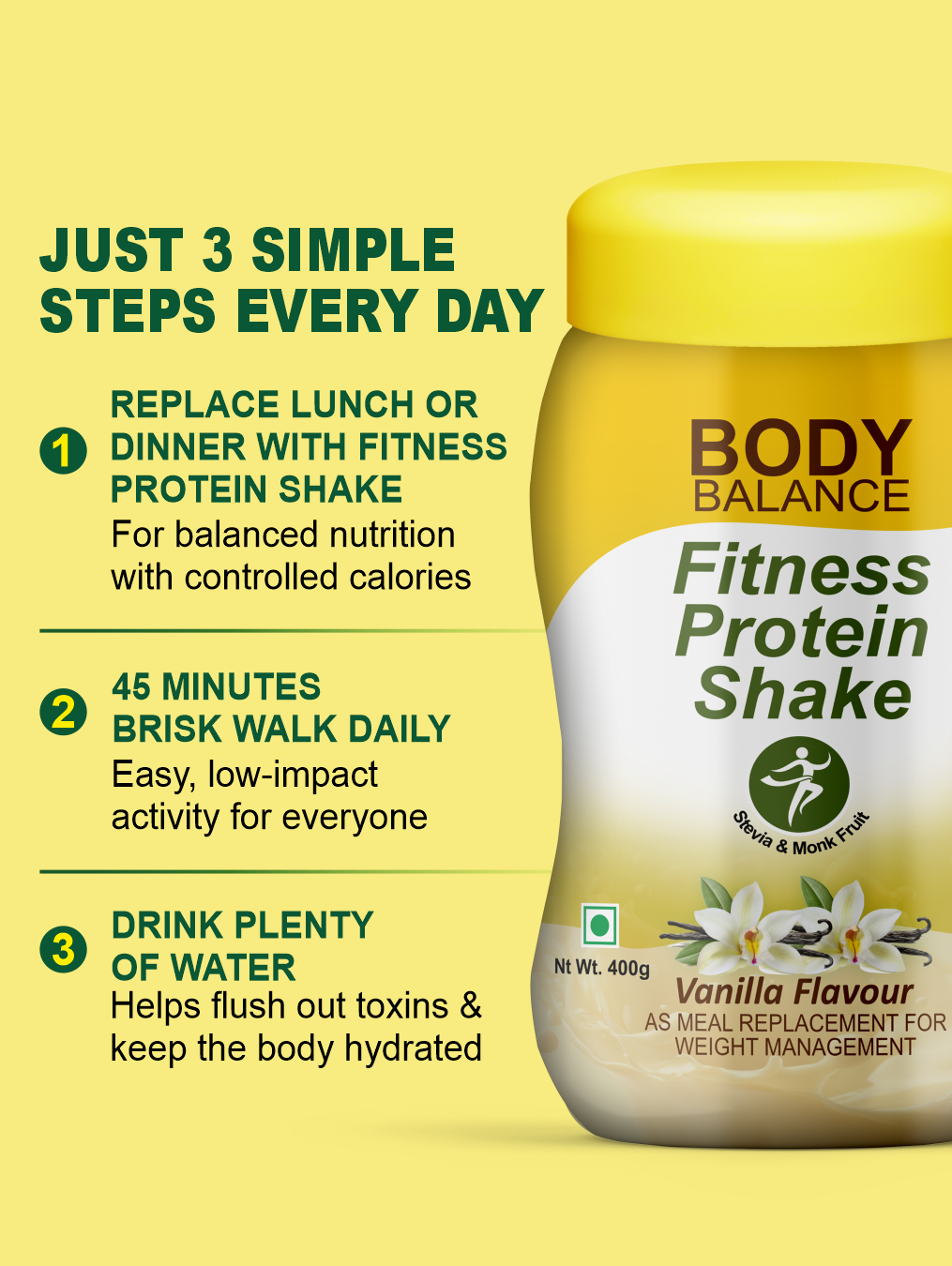
Meal Replacement Shake for Weight Management: Does It Really Work?
Managing weight often becomes difficult not because people do not understand healthy eating, but because portion sizes, irregular meals, evening cravings and busy schedules make consistency difficult. This is where a meal replacement shake for weight management may offer a practical advantage.
A measured vanilla protein shake can provide a convenient, portion-controlled alternative to a high-calorie meal. But does it actually help with weight management? Can you skip dinner and drink a protein shake instead? And will combining it with a 45-minute brisk walk produce better results?
The short answer is: yes, a properly formulated meal replacement shake may support weight loss when it replaces a meal and helps create a consistent calorie deficit. It does not cause weight loss automatically, and it will not work if it is consumed in addition to regular meals.
What Is a Meal Replacement Shake?
A meal replacement shake is designed to replace one regular meal in a controlled weight-management plan. It is different from an ordinary protein supplement.
A conventional protein powder may mainly provide protein. A genuine meal replacement should offer a more balanced combination of protein, carbohydrates, fats, fibre and essential vitamins and minerals, with a defined calorie value per serving.
Before using any protein shake as a meal replacement, check its nutritional label. Look at:
-
Calories per prepared serving
-
Protein per serving
-
Fibre content
-
Added sugar
-
Fat and carbohydrate content
-
Vitamins and minerals
-
Recommended serving size
-
Preparation directions
If a product supplies only protein and very little of the other nutrients normally obtained from food, it should not routinely replace complete meals unless advised by a qualified nutrition professional.
Does a Meal Replacement Shake Work for Weight Management?
It can—but the reason is simpler than many advertisements suggest.
Body weight generally decreases when, over time, the body uses more energy than it receives from food and drinks. This is called a calorie or energy deficit. A portion-controlled meal replacement can make that deficit easier to maintain by replacing a meal that might otherwise be larger, unpredictable or calorie-dense.
Research reviews have found that structured programmes incorporating meal replacements can produce greater weight loss than some food-based weight-loss programmes. Their usefulness appears to come from simplicity, portion control and improved adherence—not from any single “fat-burning” ingredient.
The result still depends on the complete day. A shake cannot compensate for frequent fried snacks, sugary beverages, oversized portions, excess alcohol or a second dinner later in the evening.
How Can Protein Support a Weight-Management Plan?
Protein has several qualities that can make a calorie-controlled diet easier to follow:
It may help you feel satisfied
Protein generally takes longer to digest than rapidly absorbed carbohydrates and may help control hunger between meals.
It supports muscle maintenance
During weight loss, the aim should be to reduce excess body fat while preserving as much lean body mass as possible. Adequate dietary protein, especially when combined with muscle-strengthening exercise, supports this objective.
It offers convenient portion control
A measured serving is easier to track than an unplanned restaurant meal or a dinner with repeated helpings.
Protein alone, however, does not guarantee weight loss. Total calories, nutritional quality, activity, sleep and long-term consistency remain important.
Should You Replace a Daytime Meal or the Evening Meal?
A meal replacement shake may be used in place of breakfast, lunch or dinner, depending on the person’s schedule and eating pattern. There is no universal rule that evening use causes more weight loss.
However, replacing the evening meal may be a practical option for people who:
-
Eat their largest and highest-calorie meal at night
-
Frequently order takeaway food for dinner
-
Overeat after returning home from work
-
Have limited time to prepare a balanced evening meal
-
Want a simple, measured dinner on selected days
If breakfast or lunch is the meal you regularly skip and later compensate for with snacks, replacing that meal may be more useful instead. The best meal to replace is usually the one where portion control is most difficult—not automatically the latest meal of the day.
A Practical Evening Routine
For a healthy adult for whom brisk walking is appropriate, a simple routine could be:
-
Take a 45-minute brisk walk in the early evening or at another convenient time.
-
Drink water after the walk.
-
Prepare one measured serving of the vanilla meal replacement shake according to the label.
-
Consume it in place of dinner—not alongside dinner.
-
Avoid calorie-dense snacks and sugary drinks later in the evening.
-
Keep breakfast and lunch balanced, with vegetables, whole grains or other fibre-rich foods and appropriate protein sources.
The shake does not have to be consumed immediately after walking for weight management. Timing is less important than following the serving directions and maintaining a balanced, calorie-controlled day.
Will a 45-Minute Brisk Walk Help?
Yes. Brisk walking increases energy expenditure and supports cardiovascular health, fitness and weight maintenance. It works best alongside sensible calorie control.
Walking for 45 minutes on five days of the week provides 225 minutes of moderate-intensity activity. This falls within the World Health Organization recommendation of 150–300 minutes of moderate aerobic activity per week for adults.
A brisk pace usually means you are breathing faster but can still speak in short sentences. Your safe pace will depend on age, current fitness and medical history. Beginners can start with shorter walks and gradually increase the duration.
For broader fitness and muscle preservation, adults should also consider muscle-strengthening activity on at least two days each week, when medically suitable.
Example Weight-Management Day
This is an educational example rather than an individual diet prescription:
Breakfast: A balanced breakfast containing protein and fibre, such as eggs or curd with vegetables and whole grains.
Lunch: A portion-controlled plate with vegetables, dal, paneer, eggs, fish or lean meat, together with an appropriate quantity of rice or roti.
Evening: Unsweetened tea, buttermilk or a planned light snack if genuinely hungry.
Activity: A 45-minute brisk walk.
Dinner replacement: One correctly prepared serving of vanilla meal replacement protein shake.
Throughout the day: Adequate water, limited sugary beverages and attention to overall portion sizes.
Do not drastically reduce food intake or replace multiple meals without professional supervision.
How to Use Vanilla Meal Replacement Protein Shake
Always follow the serving size and preparation instructions printed on the pack.
-
Measure the recommended quantity; do not estimate with an unmarked spoon.
-
Mix it with the stated quantity of water or other recommended liquid.
-
Remember that milk, fruit, nut butter, honey and other additions increase the total calories.
-
Use it to replace one planned meal rather than adding it to the existing diet.
-
Do not exceed the recommended intake.
-
Continue eating varied, balanced whole foods during the rest of the day.
If fullness is inadequate, first check whether the product is formulated as a complete meal replacement and whether it contains meaningful protein and fibre. Do not automatically double the serving.
Common Mistakes That Can Prevent Results
Drinking the shake after a full meal
This adds calories instead of replacing them.
Adding too many high-calorie ingredients
A serving prepared with water may have a very different calorie value from one blended with full-fat milk, banana, dates, honey and nut butter.
Skipping a meal and overeating later
If the shake leaves you extremely hungry, the routine may not be suitable or the product may not provide an adequate nutritional balance.
Ignoring the rest of the day
Weight management depends on total intake over days and weeks, not one “healthy” dinner.
Expecting targeted belly-fat loss
No shake can selectively reduce abdominal fat. A sustained energy deficit may reduce overall body fat, but the pattern of fat loss differs between individuals.
Using the shake as the only source of nutrition
Whole foods supply variety, texture, fibre and numerous nutrients. A meal replacement is a tool for selected meals, not a reason to eliminate normal food without medical supervision.
How Soon Can You Expect Results?
There is no responsible fixed promise. Results vary with starting weight, calorie intake, activity, sleep, medicines, medical conditions and consistency.
Healthy weight management should focus on a gradual, sustainable trend rather than dramatic short-term changes. Monitor weight under similar conditions once a week, and also observe waist measurement, energy, hunger, fitness and how consistently the routine can be maintained.
If nothing changes after several consistent weeks, review the full diet, serving preparation, snacks, beverages and activity instead of assuming the shake itself has failed.
Who Should Seek Medical or Dietetic Advice First?
Consult a doctor or registered dietitian before using meal replacements if you:
-
Have diabetes or take glucose-lowering medicine
-
Have kidney, liver or heart disease
-
Are pregnant or breastfeeding
-
Are under 18 years of age
-
Have a history of an eating disorder
-
Have food allergies or intolerances
-
Take medicines affected by meal timing
-
Are planning to replace more than one meal daily
-
Have unexplained weight loss or another active medical condition
Check the allergen declaration and complete ingredient list before use.
Frequently Asked Questions
Does a meal replacement shake really help with weight loss?
It may help when it replaces a higher-calorie meal and contributes to a consistent calorie deficit. It will not automatically reduce weight if total daily calories remain unchanged or increase.
Is a protein shake the same as a meal replacement shake?
Not necessarily. A protein shake may mainly supply protein, while a meal replacement should provide a broader nutritional profile. Always review the label before using a protein product as a complete meal.
Can I replace dinner with a vanilla protein shake?
A properly formulated meal replacement can replace dinner for an appropriate healthy adult when used according to its directions. Continue to obtain balanced nutrition from whole foods during the rest of the day.
Is evening the best time for a meal replacement shake?
Not for everyone. Evening use is practical if dinner is normally your heaviest or least controlled meal. Weight management depends more on the total calorie balance and consistency than on a special time of day.
Should I take the shake before or after my 45-minute walk?
Either can fit into a weight-management routine. Many people find it convenient after the walk as their planned evening meal. Hydrate adequately and choose timing that feels comfortable.
Can I eat dinner after drinking the shake?
If the shake is being used as a dinner replacement, eating a full dinner afterwards defeats the purpose. If you repeatedly remain hungry, review the product’s nutrition profile and speak to a dietitian rather than routinely adding another meal.
Will it reduce belly fat?
It cannot specifically target belly fat. It may support overall fat loss only if the complete routine creates a sustained energy deficit.
Can I drink a meal replacement shake every day?
Follow the pack directions and consider your complete diet and health status. Long-term daily use is best discussed with a qualified nutrition professional, particularly when medical conditions are present.
Can I mix the vanilla shake with milk?
Only if allowed by the directions. Milk changes the protein, carbohydrate and calorie content, so include it when assessing total daily intake.
Is walking alone enough for weight loss?
Walking supports health and increases calorie expenditure, but food intake usually has a substantial influence on weight loss. Combining regular activity with an appropriate eating pattern is more effective than relying on either one alone.
The Bottom Line
A meal replacement shake for weight management can be a useful tool for portion control and convenience. It works when it genuinely replaces a meal, helps reduce total calorie intake and is used within a nutritionally balanced lifestyle.
For people who tend to eat a heavy dinner, using one measured serving as an evening meal replacement—combined with a 45-minute brisk walk on most days—may be a practical routine. The shake is not a shortcut, and evening timing has no unique fat-burning effect. Sustainable results come from the full pattern: appropriate portions, sufficient protein and fibre, regular activity, adequate sleep and consistency.


